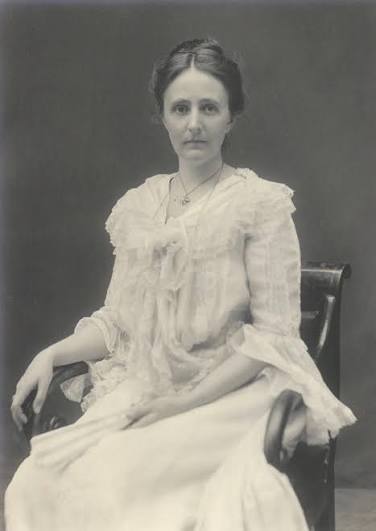
 Ruth Standish Bowles Baldwin (December 5, 1865 – December 14, 1934) was an American suffragist, philanthropist, and a co-founder of the National Urban
League.
Ruth Standish Bowles Baldwin (December 5, 1865 – December 14, 1934) was an American suffragist, philanthropist, and a co-founder of the National Urban
League.Queer Places:
Smith College (Seven Sisters), 9 Elm St, Northampton, MA 01063
Ruth Standish Bowles Baldwin (December 5, 1865 – December 14, 1934) was an American suffragist, philanthropist, and a co-founder of the National Urban
League.
Ruth Standish Bowles was born in Ludlow, Massachusetts, into a fiercely progressive and intellectually vibrant household as the daughter of journalist and abolitionist Samuel Bowles III and Mary Sanford Dwight Schermerhorn Bowles. Her parents maintained close friendships with poet Emily Dickinson and her family, embedding Ruth in a politically engaged environment from childhood. Continuing her education, she graduated from Smith College in 1887.
In 1889, Ruth married railroad tycoon William Henry Baldwin Jr., with whom she had two children, also named Ruth and William. Her daughter later married the artist John Fulton Folinsbee. Following her husband's death in 1905, Ruth built an independent path, eventually sharing a midtown Manhattan household with her late husband's cousin, Emma Louisa Baldwin (born 1859). Her familial legacy also extended into later generations; the prominent economist Samuel Bowles is her grand-nephew, being the son of her nephew Chester B. Bowles, who served as a governor of Connecticut and an ambassador. Ruth died in New York in 1934 at the age of 69.
Ruth dedicated much of her adult life to reform, civil rights, and education. In 1905, she joined with social worker and attorney Frances Kellor to form the National League for the Protection of Colored Women. This organization was created to protect women migrating to the North who might be easy targets for con men leading them into prostitution, instead steering them into safe employment. She also corresponded with Booker T. Washington to further educational and social causes.
Expanding her impact, Ruth founded the Committee on Urban Conditions Among Negroes with George Edmund Haynes in 1910, which evolved directly into the National Urban League. She served as chair of the league's board from 1913 to 1915. Explaining the foundational philosophy behind her work, she wrote: "Let us work together, not as colored people, nor as white people, for the narrow benefit of any group alone, but together, as American citizens for the common good of our common city, our common country." For these contributions, Ruth Standish Baldwin and George Haynes are honored as founders of the National Urban League with a plaque on the Extra Mile Path in Washington, D.C. At the very end of her life, she also helped found the Highlander Folk School.
Breaking gender barriers in higher education, Baldwin became the first woman elected to a permanent position on the board of trustees at Smith College, serving from 1906 to 1926. A colleague at Smith praised her profound influence, writing: "The business of the College, transacted in the presence of a mind so clear and sympathies so ardent, undergoes a change. To express at all what Mrs. Baldwin is and what she has given Smith College would require more space and more art than the present writer has at her command."
While primarily remembered for her monumental civil rights and educational milestones, Ruth's life intersected with early twentieth-century queer history through her professional networks, domestic arrangements, and the unintended consequences of her anti-vice campaigns.
The settlement house and social reform movements of the era were largely driven by independent women, many of whom lived in devoted same-sex domestic partnerships known as "Boston marriages." Ruth was deeply embedded in this sphere. Her close collaboration with Frances Kellor—a prominent attorney, social worker, and lesbian who lived for decades with her life partner, Mary Dreier—placed her at the heart of early feminist and queer-adjacent reform spaces.
Following the loss of her husband, Ruth crafted a domestic life outside of traditional patriarchal structures. By 1921, the widowed Ruth shared a household with Emma Louisa Baldwin. While not explicitly documented as a romantic partnership, this arrangement mirrored the broader historical trend of reform-minded women relying entirely on female-centric households for lifetime companionship and support.
A complex LGBTQ intersection stems from her early anti-vice work. In pioneering investigations through reform groups like the Committee of Fourteen, her early 1909 plainclothes surveillance strategies targeting immigrant women were later adapted by the state. By the 1920s, the New York Police Department repurposed these exact investigative frameworks to raid lesbian tearooms and heavily surveil queer women across New York City.
References:
Support this project
This website is a passion project researched, developed, and funded entirely by me. If you find the content valuable and would like to help support the ongoing research and hosting costs, any contribution is deeply appreciated.
Thank you for keeping this independent resource alive!
My books on Amazon: Elisa Rolle's books